What Is the Jaipur Elephant Festival?
The Jaipur Elephant Festival was an annual cultural celebration held in Jaipur, Rajasthan, on the eve of Holi — the Hindu festival of colours — which typically falls in February or March. Organised by Rajasthan Tourism and rooted in centuries of royal and religious tradition, the festival showcased the deep bond between Indian culture and elephants through processions, games and artistic decoration.
Important note for travellers: Due to sustained pressure from animal rights organisations, the Jaipur Elephant Festival has not been held since 2012. This page documents its history and cultural significance. Visitors interested in ethical elephant experiences in Rajasthan should explore sanctuaries and conservation centres instead.
Cultural and Historical Significance of Elephants in India
Elephants hold a uniquely revered position in Indian civilisation — religious, royal and symbolic all at once.
In Hindu mythology, the elephant is closely associated with Lord Ganesha, the elephant-headed god regarded as the remover of obstacles. Ganesha is worshipped before all major undertakings across India, making the elephant a symbol of divine wisdom and good fortune.
In Vedic tradition, the elephant is one of nine treasures (Navratna) said to have emerged from the cosmic churning of the ocean (Samudra Manthan) by gods and demons — a story that gave the festival its mythological foundation.
In royal history, Rajput kings used war elephants as symbols of strength and military might. The strongest elephants were identified through competitions and fighting — early precursors to the festival events.
History of the Jaipur Elephant Festival
The festival’s origins trace back to ancient Rajasthan, where royal courts used elephants in warfare, religious processions and state ceremonies. Over time, these royal displays evolved into a public cultural celebration.
In its modern form, the festival was organised by Rajasthan Tourism as part of the state’s annual events calendar and was held at Chaugan Stadium near the City Palace. As attendance grew year on year, the venue was relocated to the Jaipur Polo Ground (opposite Sawai Man Singh Stadium) to accommodate the larger crowds.
The festival ran annually until 2012, when animal welfare groups — citing concerns about elephant welfare, training methods and the conditions in which captive elephants were kept — successfully campaigned for its discontinuation. Rajasthan Tourism has not revived it since.
What Happened at the Elephant Festival (2012 and Earlier)
For travellers and history enthusiasts, here is a factual account of what the festival involved during its active years.
The Grand Procession
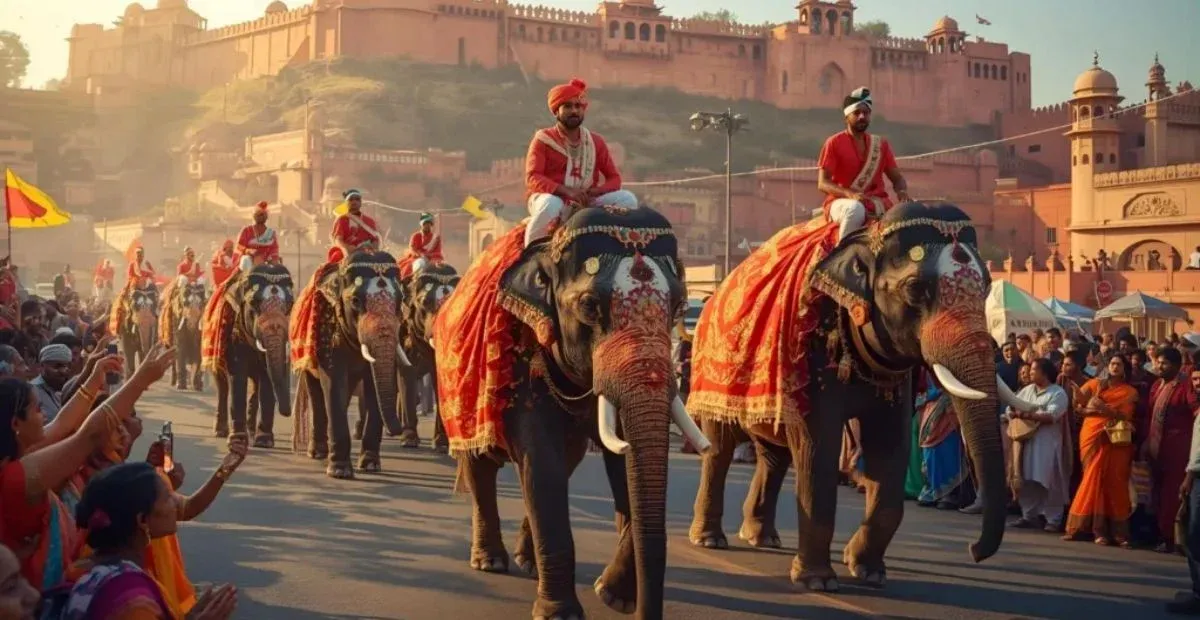
The centrepiece of the festival was a formal procession of decorated elephants led by their mahouts (elephant keepers). Elephants were adorned with:
- Embroidered velvet rugs and caparisons
- Silver anklets and ornamental jewellery
- Intricate paintings applied directly to their skin in vivid colours
- Floral garlands
Mahouts were dressed in traditional Rajput royal attire with matching silver ornaments. The procession moved through the grounds to the sound of traditional instruments and the rhythmic striking of sticks — a sensory spectacle that drew thousands of spectators.
Elephant Games and Competitions
Following the procession, a series of elephant-based competitions took place:
| Elephant Race | Elephants competing across a marked track |
| Elephant Polo | Teams guiding elephants to score polo goals |
| Tug of War | A single elephant pitted against a team of 19 men and women |
| Best Decorated Elephant | A jury of experts and visitors evaluated and selected a winner |
Colour and Crowd Interaction
In keeping with the Holi theme, elephants splashed coloured powder and water over the crowd and offered garlands to spectators — creating the festival’s most photographed moments.
GajShringar Exhibition
Running alongside the main events was the GajShringar Exhibition a marketplace of elephant-themed souvenirs, ornaments, handicrafts and traditional Rajasthani street food. This part of the festival offered a commerce and culture angle separate from the elephant events.
- Timings (historical): 4:30 PM – 7:00 PM
- Venue (historical): Jaipur Polo Ground, Pink City, Jaipur
- Venue (historical): Jaipur Polo Ground, Pink City, Jaipur
- Entry fee: Free to attend; charges applied at exhibition stalls and food vendors.
Why Was the Jaipur Elephant Festival Discontinued?
The festival was halted in 2012 following organised campaigns by animal rights organisations who raised concerns about:
- The welfare of captive elephants used in performances
- Training and handling methods used by mahouts
- The physical stress placed on animals during games like polo and tug of war
Rajasthan Tourism, while maintaining the cultural heritage argument, did not reinstate the festival. The debate around it reflects a broader global conversation about the use of elephants in tourism one that has reshaped how responsible travel operators approach elephant experiences across South and Southeast Asia.
Ethical Elephant Experiences Near Jaipur Today
Travellers who want to connect with elephants in Rajasthan have responsible alternatives:
- Elephant villages near Amer Fort — Several mahout families offer ethical, no-ride interactions where visitors can feed and walk alongside elephants
- Elephant conservation centres — Organisations focused on rescue and rehabilitation provide educational visits
- Photography and observation experiences — Watching elephants bathe in their natural care environments
At Delightful India Holidays, we exclusively recommend and book elephant experiences that meet animal welfare standards — no riding, no performance, no chains.
Planning Your Trip to Jaipur
Best Time to Visit Jaipur
Jaipur is best visited between October and March, when temperatures are comfortable for sightseeing. The Holi period (February–March) remains a vibrant time to visit the city celebrates with colour, music and street festivities even without the Elephant Festival. Visitors can easily book customized experiences through popular Jaisalmer Tour Packages, which often include desert camping, sightseeing, and local cultural activities. Those planning a broader Rajasthan trip can also explore Jaipur Tour Packages to combine the desert with the Pink City’s palaces and heritage.
How to Reach Jaipur
- By Air: Jaipur International Airport (JAI) — well connected to Delhi, Mumbai, Bengaluru and international hubs
- By Rail: Shatabdi Express from Delhi (approx. 4.5 hrs); connections from Bikaner, Udaipur, Jodhpur, Ahmedabad, Lucknow and Secunderabad
- By Road: NH48 from Delhi (approx. 5–6 hrs); state buses, private cabs and intercity coaches widely available.
Getting Around Jaipur Polo Ground Area
The Polo Ground is located in central Jaipur, opposite Sawai Man Singh Stadium. Local auto-rickshaws, cycle rickshaws, app-based cabs (Ola, Uber) and city buses all serve the area.
Where to Stay in Jaipur
Jaipur offers accommodation across all budgets:
- Luxury: Heritage havelis and 5-star palace hotels (Rambagh Palace, Samode Haveli)
- Mid-range: Boutique guesthouses in the Old City
- Budget: Guesthouses near Bani Park and Sindhi Camp
Planning a trip to Jaipur or Rajasthan? Contact Delightful India Holidays for customised private tours built around your interests — cultural festivals, heritage sites, wildlife and more.